
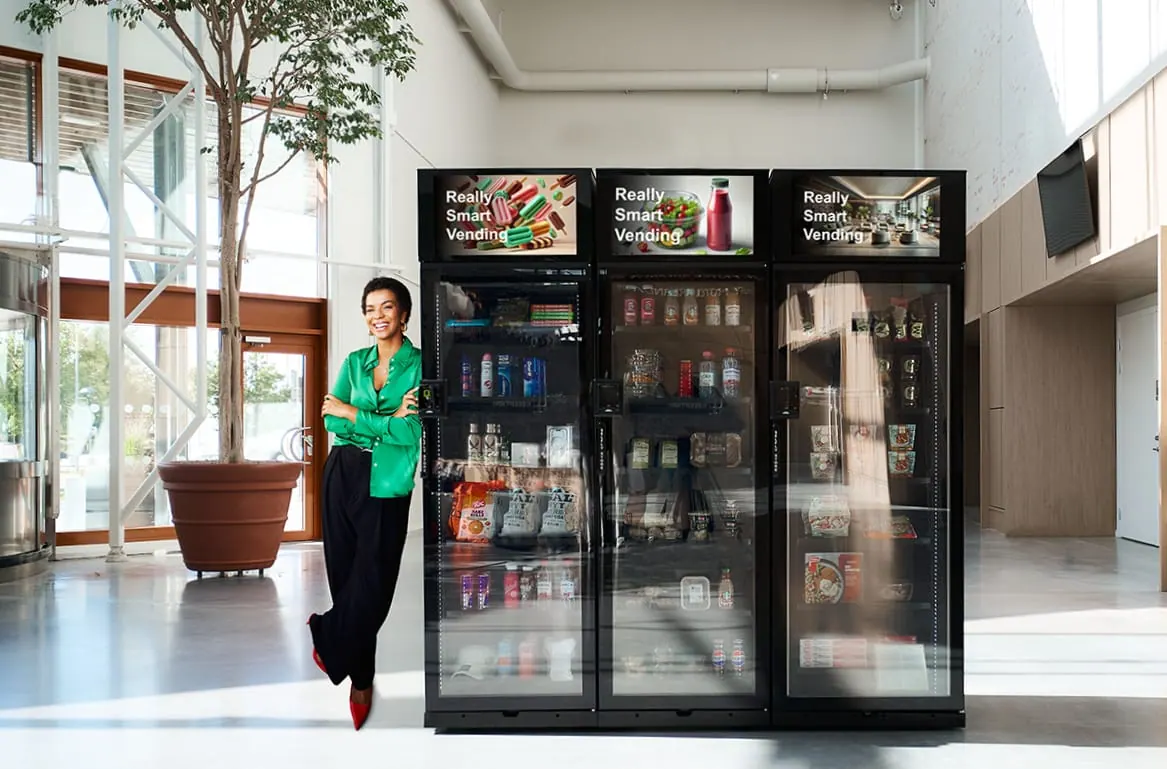
Income is not guaranteed; it depends heavily on resident density, access, product mix, nearby competition and the operating agreement. But the resident use case is clear: a moment when leaving the building feels disproportionate to the need — water or a breakfast item early in the morning, a ready meal after shops close, a forgotten charging cable, laundry or baby essentials in an emergency, a cold drink after the building gym, ice cream for a family evening.
Choose the right commercial model
Fixed space rental
The operator pays for the location and runs the cabinet — predictable income for the building, more sales risk for the operator. The contract should cover utilities, access, cleaning, insurance and removal.
Revenue share
The building receives a share of sales. Define gross sales, refunds, taxes, payment fees and reporting clearly; revenue share is not automatically more valuable than rent.
Resident amenity model
The owners' association may prioritise service and provide space on favourable terms; product subsidies require an agreed payment and accounting design.
Managed in-house retail
The property or FM company buys stock and retains the retail margin — gaining control but adding procurement, food-safety, refill and support duties.
Whichever model is chosen, name the legal seller and the party responsible for stock, permits, refunds and product safety.
From one tower to a multi-building rollout
A portfolio of cabinets is a distributed retail operation; per-location visibility prevents a strong tower from hiding a weak one. Selfly Cloud shows sales, real-time inventory, expiring products, refill records and cabinet status by location: which tower sells fresh meals and which prefers ambient essentials, where stock-outs happen after midnight, which products expire before the next refill, how many visits each building requires. Standard hardware simplifies service, but local data should shape each community's assortment.
What should a residential cabinet stock?
The chilled model (+2…+6°C) suits appropriately labelled water, dairy, sandwiches, salads and ready meals. The freezer model (−18°C) supports ice cream and frozen foods — especially near an indoor family amenity or resident lounge. The ambient model carries packaged food and non-food convenience items: charging cables, toiletries, sealed laundry products, nappies, pet accessories. Strong chemicals or leaking containers require separate cabinets or clear physical separation from food.
Installation: simple does not mean unplanned
In a typical indoor deployment, the main site utility is a suitable power socket. The survey should still confirm electrical capacity, reliable connectivity, indoor temperature and ventilation, level load-bearing flooring, refill access, CCTV coverage without exposing payment details, accessible circulation and fire egress, plus landlord, owners'-association and insurer requirements. For semi-open lobbies, Dubai heat, humidity, dust and direct sun need particular attention — do not assume an indoor cabinet can be placed outside without manufacturer and site approval.
Make it feel like an amenity, not clutter
Residents judge the building, not the supplier. Agree cleaning frequency, waste-bin ownership, delivery windows, screen content and support response times; keep prices visible and consider a multilingual instruction panel. A small, well-lit retail corner with clear signage feels more intentional than a machine placed wherever a socket happens to exist.
Design a measurable pilot
Choose a building with a clear convenience gap and a cooperative on-site team. Review sales, stock-outs, waste, support, refill labour and resident feedback, plus security and housekeeping observations. Expand only if the operation remains clean, compliant and manageable.
Food safety, licensing and contracts
Food retail activity, product registration, trade-licence scope and site approvals vary by operator and building model — confirm requirements with Dubai Municipality and other relevant authorities before launch. The location agreement should cover electricity, internet, access, security, maintenance, downtime, product liability, reporting, termination and removal. This is general business guidance, not legal advice.
Moi Store's UAE delivery model
Moi Store is the official distributor of Selfly Store, the Finnish RFID retail system originally developed as a Stora Enso venture. Chilled, freezer and ambient cabinets are supplied and configured in Istanbul for delivery to the UAE. Multi-building projects include payment configuration, Selfly Cloud structure, product-tagging workflow, user training and a location-by-location rollout plan.
Frequently asked questions
Does a residential cabinet need more than a power socket?
A suitable socket is the primary site utility indoors, but connectivity, ventilation, floor conditions, access and local approvals must also be checked.
Can the owners' association receive revenue share?
It can be structured contractually where permitted, but the calculation, seller identity, licences, taxes and responsibilities should be reviewed with the relevant advisers and authorities.
Can every tower use the same products?
Possible, but rarely optimal — resident profile, nearby retail, amenities and time-of-day demand should shape each location's assortment.
Who handles expired products and temperature alerts?
The operating agreement should name a responsible party. Cloud alerts identify issues, but someone must respond, inspect and remove affected stock.