
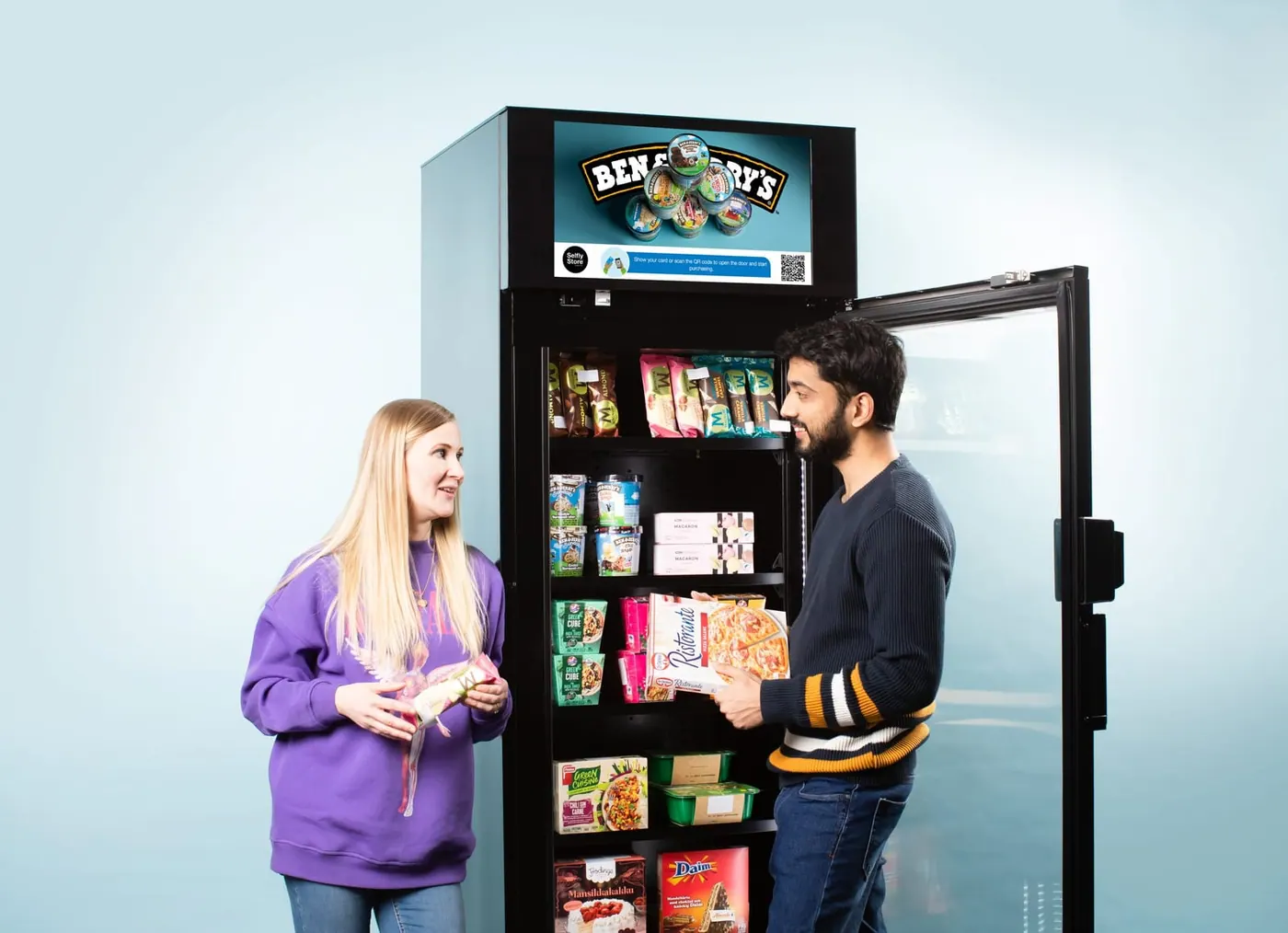
Schools and universities differ, but both require suitable products, transparent prices and rapid problem identification. RFID gives every tagged item its own identity, allowing stock, sales and expiry data to be monitored remotely.
Put food safety before product variety
A school cabinet may look like a small refrigerator, but operationally it is a food retail point. The institution and operator need a documented process covering approved suppliers, delivery, temperature control, loading, cleaning, allergens, expiry dates, recalls and complaints. The UAE Government includes vending machines within the school food-safety framework, and Dubai publishes school food and nutrition guidance — confirm approval and product rules for each institution and emirate rather than copying one site's policy.
How expiry automation changes the control process
Physical inspection still matters, but it should not be the first moment the institution learns an item is approaching its use-by date. In the Selfly Store system, each RFID-tagged item carries product-level information including expiry data; Selfly Cloud provides real-time inventory by cabinet, lists and alerts for soon-to-expire items, email notifications, automatic discount rules for eligible items, and optional cabinet locking if an expired item remains inside. Data must be entered accurately — automation still requires physical checks, named owners and audit records.
Chilled, frozen or ambient?
The cabinet type follows the approved assortment. The chilled model (+2…+6°C) suits approved sandwiches, yoghurt, fruit portions and dairy drinks whose labels support the chosen conditions. The freezer model (−18°C) can hold suitable frozen products — in a school, the question is not only whether a product can be frozen but whether it belongs within the institution's nutrition policy. The ambient model carries approved packaged food and selected non-food essentials; universities may add stationery, charging cables or personal-care items, while younger school settings require a narrower, controlled list.
What should not be sold?
- Food or drink not permitted by the institution's nutrition rules; energy drinks and highly caffeinated products in school-age settings
- Unlabelled, open or home-prepared food; products with unclear ingredients, allergens or storage instructions
- Expired or damaged items; medicines or products presented as treatment; unapproved supplements
- Tobacco, vaping products and all age-restricted goods
Universities may have broader policies, but food safety and campus approvals still apply.
Cashless should also mean understandable
A student taps an accepted card or wallet, opens the cabinet, takes items and closes it; RFID identifies what was removed and initiates payment. Prices should be visible before purchase, with a simple path for refunds — particularly for younger users. Closed-loop student IDs, spending limits, subsidies or parent-funded accounts must be confirmed with the chosen payment setup, not assumed. Keep payment and student data appropriately separated: stock planning does not require profiling an individual student's diet.
Parent perception is built through transparency
“AI vending” alone will not reassure parents. A clear communication sheet should explain the approved product categories, price visibility and payment method, allergen and label requirements, temperature and expiry monitoring, cleaning and refill responsibility, and the refund process. The cabinet is a controlled access point for approved products, not a replacement for balanced meal service.
Monitoring across a school or campus group
Selfly Cloud shows sales, stock, expiring items, refills and device status by location: are approved products consistently available, which items expire before sale, are temperature alerts answered on time, which locations generate repeated refunds, and how demand shifts during examinations or holidays.
Pilot design for education sites
Begin with one supervised location and a narrow approved range. Test payment, refunds, refill access, temperature-alert response and support; involve administration, food-safety, procurement and parent- or student-facing teams. Before operation, confirm food activity, trade-licence, product and site requirements with Dubai Municipality or the authority responsible for the relevant emirate. This article is general information, not legal advice.
Moi Store for UAE education projects
Moi Store is the official distributor of Selfly Store, a Finnish smart-retail platform originally developed as a Stora Enso venture. RFID cabinets in chilled, freezer and ambient formats are supplied and configured in Istanbul for delivery to the UAE, with cloud setup, tagging workflow and operational training planned around the institution's approved use case.
Frequently asked questions
Can a school completely automate expiry checks?
The system automates product-level tracking and alerts, but physical inspection, correct data entry, cleaning and responsible oversight remain necessary.
Can students pay with cash?
The intended flow is cashless through the configured payment terminal; accepted cards, wallets or closed-campus methods depend on the selected UAE payment setup.
Can the cabinet sell energy drinks at a university?
Campus rules and applicable product regulations must be checked — the institution should make a deliberate policy decision rather than assume permission.
Who approves the products in Dubai schools?
The school and operator should confirm current requirements with Dubai Municipality and the relevant education authority, and document approval before launch.